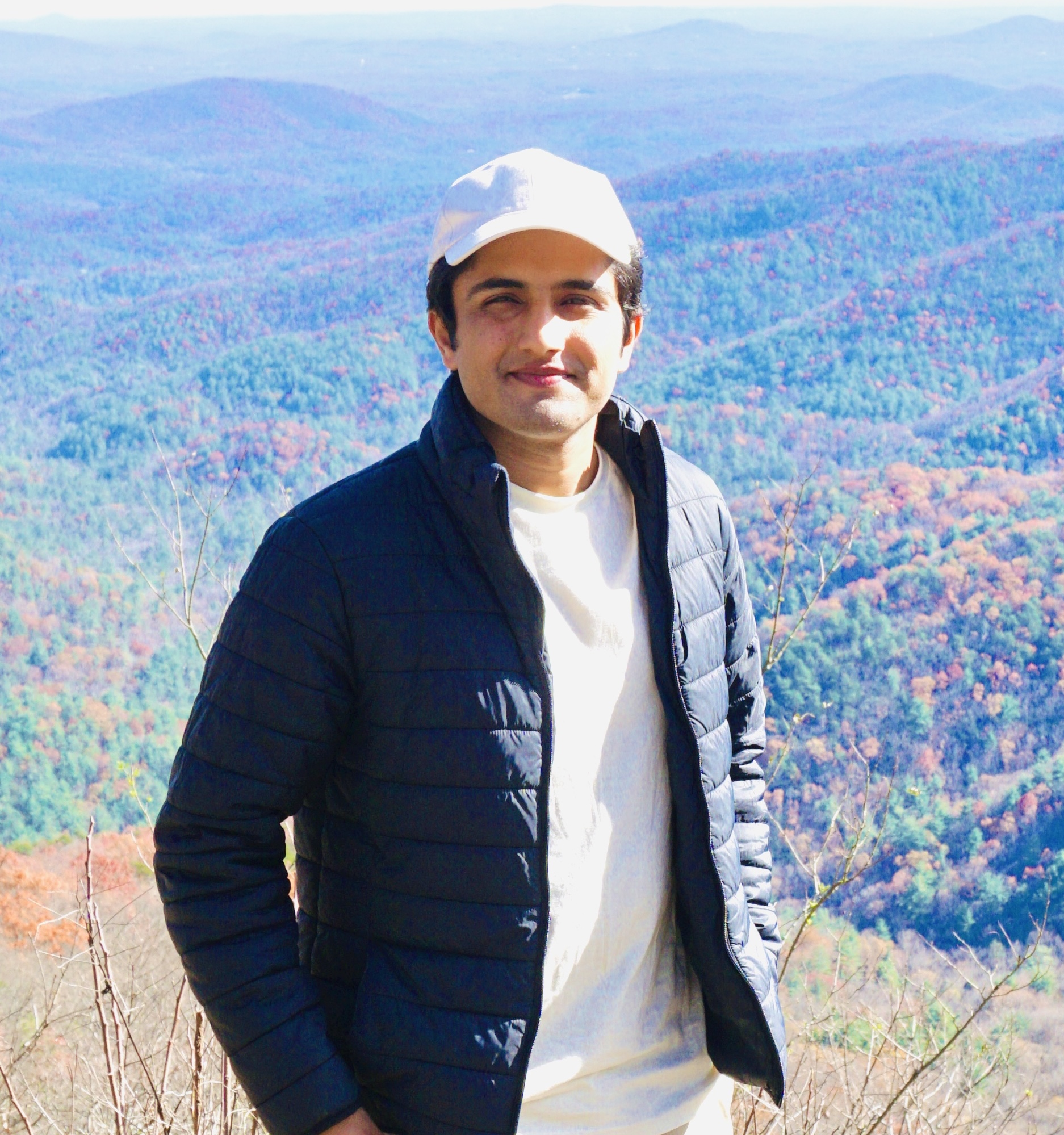
Mansoor Ahmed
Grad Student
Overview
Mansoor Ahmed is a Grad student in the Department of Computer Science at Georgia State University. His research focuses on Machine Learning, Deep Learning, Computational Biology, and Image Processing. He specializes in developing models for Biomolecule design such as antibodies, peptides, and enzymes.
Research Interests
- Bioinformatics: Designing computational pipelines for antibody-antigen interaction prediction and protein sequence analysis.
- Neuroimaging: Developing machine learning models for brain age estimation, Alzheimer’s disease detection, and multi-site MRI harmonization.
- Deep Learning: Developing generative models such as Discrete Flow and Diffusion models for low-data regimes and learning representations for proteins via language modeling and graph neural networks.
- Federated Learning: Developing decentralized algorithms for privacy-preserving analysis of healthcare data.
- Graduate Teaching Assistant
Georgia State University, Atlanta, GA, USA - Jan 2025 – Present
Course: Advanced Machine Learning (CSC 8850) - Jan 2025 – Dec 2025
Course: Spatial and Scientific Databases (CSC 8713) - Lahore University of Management Sciences, Lahore, Pakistan
Sep 2022 – Dec 2022
Course: Mathematical Foundations for Machine Learning and Data Science (EE 212)
Selected Publications
- Exploring the Impact of Embedding Methods on Graph-based Antibody-aware Epitope Prediction
Mansoor Ahmed, Sarwan Ali, Avais Jan, Murray Patterson, Imdad Ullah Khan
Presented at ICCABS 2025. Slides | GitHub- Developed a GCN framework for antibody-antigen interaction prediction using 3D structural data.
- Achieved state-of-the-art performance on the AsEP benchmark dataset.
- Robust Brain Age Estimation via Regression Models and MRI-derived Features
Mansoor Ahmed, Usama Sardar, Sarwan Ali, Shafiq Alam, Murray Patterson, Imdad Ullah Khan
ICCCI 2023. Paper | Slides | GitHub- Integrated volumetric measurements from T1-weighted MRIs to estimate brain age.
- Achieved an MAE of 3.25 years.